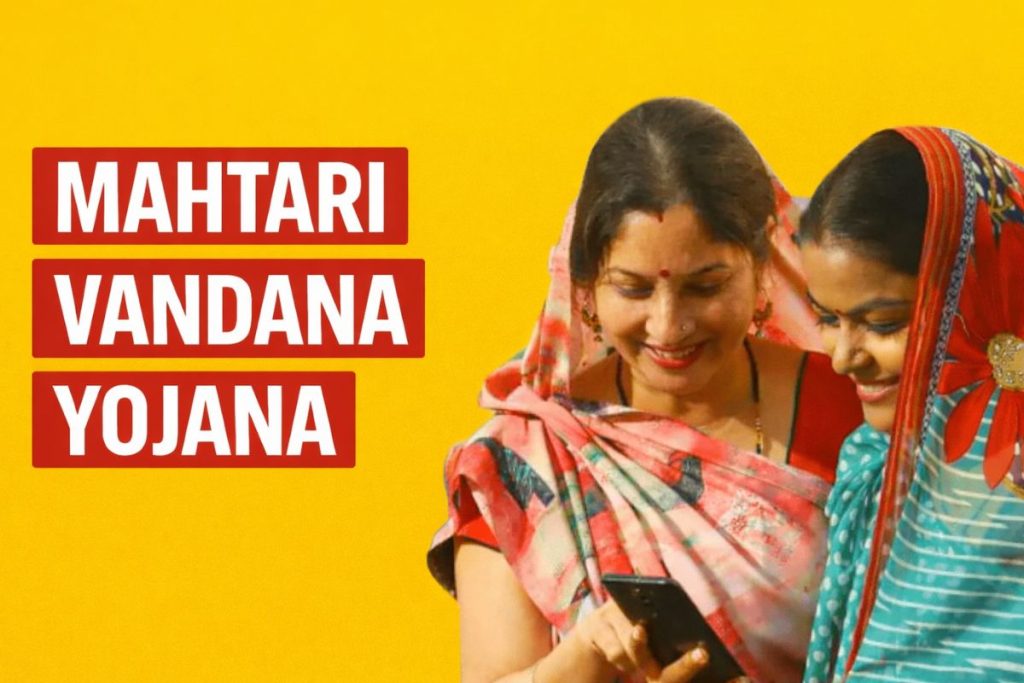
The empowerment of women’s finances has become a major element of inclusive development in India. In recognition that financial security improves women’s decision-making capacity as well as their family’s welfare and social standing, a number of state governments have launched Direct Benefit Transfer (DBT) schemes targeted towards women. Of these, Mahatari Vandana Yojana is an innovative program introduced by the Government in Chhattisgarh in order to give a monthly, guaranteed financial aid for married women.
It was launched in March 2024. Mahatari Vandana Yojana seeks to increase the financial self-sufficiency of women by depositing each month with a monthly amount of Rs 1,000 directly into their account in their banks. Through ensuring a stable income level, the scheme is designed to increase gender equality, enhance the financial stability of families and strengthen the role of women in community and family decisions. With around 70% of women who are beneficiaries the scheme is one of the most comprehensive women-oriented cash transfer programs on the national level.
What Is Mahatari Vandana Yojana?
Mahatari Vandana Yojana an month-long cash aid program that was introduced in the Chhattisgarh government to promote economic empowerment for women of different socio-economic backgrounds. It is founded on the idea of regular and reliable income assistance will significantly increase women’s self-confidence and resilience, particularly in economically disadvantaged rural households.
In contrast to one-time assistance programs this program offers an ongoing, monthly program of support that allows women to manage household expenditures and contribute to savings and handle emergency situations. This scheme further demonstrates its commitment by the federal government towards gender sensitive governance which sees women acknowledged as active participants in the economy instead of passive recipients.
Mahatari Vandana Yojana Overview
| Particulars | Details |
| Scheme Name | Mahatari Vandana Yojana |
| Launched By | Government of Chhattisgarh |
| Launch Year | 2024 |
| Beneficiaries | Married women (including widowed, divorced, abandoned) |
| Minimum Age | 21 years old |
| Benefit Amount | Rs 1,000 per month |
| Mode of Transfer | Direct Benefit Transfer (DBT) |
| Objective | Women’s financial security and empowerment |
| Estimated Beneficiaries | More than 70 million women |
| Official Website | https://www.myscheme.gov.in/ |
Objectives of Mahatari Vandana Yojana
The main goals of the scheme are:
- Inspiring women’s financial independence
- Offering the minimum income to guarantee
- The role of women in the family’s decision-making process
- Promotion of equal gender representation and social protection
- Aiding widowed, divorced and abandoned women
- Reduced economic vulnerability on the level of households
Mahatari Vandana Yojana Eligibility Criteria
To ensure a targeted delivery to ensure targeted delivery, the program follows clear eligibility criteria.
Eligible Beneficiaries
An individual woman can be considered eligible for the program if she
- Is a citizen of Chhattisgarh
- Is married
- Are you 21 or over on January 1, 2024.
- Includes:
- Widowed women
- Women who have divorced
- Women who have been abandoned
Exclusions (Indicative)
- Women under the age of 18
- Non-residents of Chhattisgarh
- Women who are already receiving the same or more monthly benefits have no the possibility of top-ups
Benefits Under Mahatari Vandana Yojana
Monthly Financial Assistance
- A monthly amount of Rs.1,000 directly into the beneficiary’s account on DBT.
Top-Up Provision
- Women who receive less than one thousand rupees each month from other assistance or pension schemes are eligible for additional money to guarantee a minimum benefit total of 11,000 rupees each month.
Long-Term Impact
- Financial stability of households is improved
- Women’s participation in the making of economic decision-making
- Improved access to health care and nutrition as well as education-related spending
Implementation Mechanism
The scheme is implemented by:
- Direct Benefit Transfer (DBT) to linked bank accounts
- Aadhaar-based verification (where it is applicable)
- Coordination with local bodies of administration
This clear mechanism reduces leakages and guarantees timely payments on time.
Importance of Mahatari Vandana Yojana in Women Empowerment
Mahatari Vandana Yojana is more than financial aid. It is a structure-based intervention designed to address gender-based inequality in the economy. In order to ensure a steady revenue stream plan:
- Reduces dependence on women
- Improves self-esteem and dignity
- Encourages saving habits
- It acts as a social security net
The programs are particularly effective in semi-urban and rural areas where women typically do not have an income source that is independent.
Other Women Empowerment Schemes at State Level
Many states have initiated similar initiatives to help promote women’s rights:
- Ladli Behna Yojana – Madhya Pradesh
- Mahalakshmi Scheme – Telangana
- Kanya Sumangala Yojana – Uttar Pradesh
- Shakti Fund – Odisha
These plans reflect a rising trend towards gender-focused social security policies.
Women Empowerment Schemes at Central Level
On a national scale, women-focused schemes are broadly classified according to the following:
Economic & Financial Empowerment
- PM Matru Vandana Yajana (PMMVY): Cash assistance of Rs5,000 to the first child, and Rs6,000 for the next child (if it is a girl).
- Mahila Samman Savings Certificate: A special small savings plan for women.
- Stand-Up India: Bank loan for women entrepreneurs.
Education & Skill Development
- Beti Bachao Beti Padhao: The focus is on improving the child sex ratio and improving the education of girls.
- Sukanya Samriddhi Yajana: Savings for the long-term scheme to fund the education of girls and their marriage children.
- Skills India (Women-focused Programmes): Enhancing employment and entrepreneurship by providing training.
Health & Nutrition
- Janani Suraksha Yojana (JSY): Cash incentives for institutional deliveries.
- POSHAN Abhiyaan: Support for nutrition for mothers and children.
- The Mission Indradhanush: Infection for parents and children.
Safety & Legal Support
- One Stop Centre Scheme (Sakhi): Support for women who are victims of violence.
- The Women’s Assistance Line (181): Emergency assistance 24 hours a day, 7 days a week.
- Nirbhaya Fund: Strengthening women safety infrastructure.
Political & Social Empowerment
- Women’s reservation in Panchayats is reserved for women.
- Women’s Reservation Bill (108th Constitutional Amendment) proposing 33% of the legislatures to be reserved for women.
Mahatari Vandana Yojana transformational initiative from the Chhattisgarh government towards enhancing women’s economic security as well as the empowerment of women in society. Through the provision of guaranteed monthly income assistance, it directly reduces the financial burden and strengthens women’s role within their families and in communities.
In the context of similar initiatives from the central and state levels Mahatari Vandana Yajana reflects the larger shift in policy direction in India, one that acknowledges women as the key to inclusive growth. If implemented with a solid and long-term commitment from the political sphere, these schemes could transform the gender gap and strengthen economic resilience at the local scale.
FAQ’s
1. Is Mahatari Vandana Yojana only for married women?
This scheme is applicable to married women, as well as divorced, widowed and abandoned women.
2. How much financial assistance is provided under the scheme?
Women who qualify receive Rs.1,000 per month via Direct Benefit Transfer.
3. Can beneficiaries receive benefits from other schemes simultaneously?
Yes. If total monthly benefits from other schemes are below Rs 1,000, additional funds are provided to reach Rs 1,000.