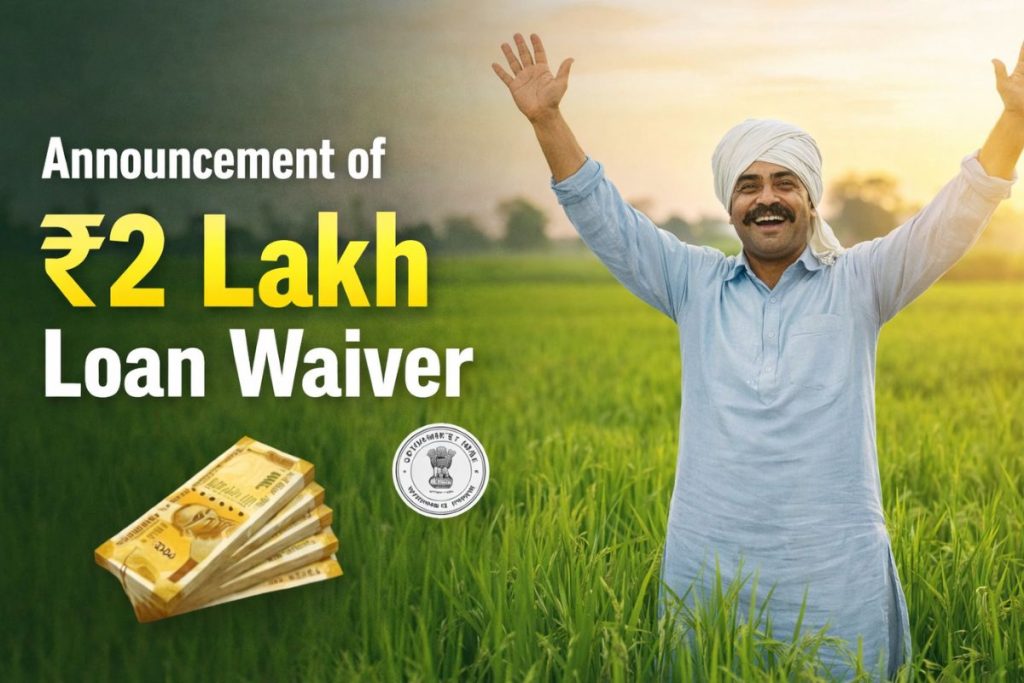
India’s farmers continue to face rising input costs, unpredictable weather, fluctuating crop prices, and mounting credit pressure. Entering 2026, farmer debt relief has once again become a major policy focus, with several state governments announcing or expanding loan relief measures up to ₹2 lakh, alongside cost-saving initiatives related to agricultural credit.
While headlines often suggest a single nationwide waiver, the reality is more nuanced. Debt relief in 2026 is being driven mainly by state-level decisions, including loan waivers, phased write-offs, interest relief, and stamp-duty exemptions on farm loans. For lakhs of small and marginal farmers, these steps can mean the difference between restarting cultivation confidently or slipping further into debt.
Why Farmer Debt Relief Matters in 2026
Agricultural credit is the backbone of India’s rural economy. From seeds and fertilizers to irrigation and machinery, most farmers depend on short-term crop loans or Kisan Credit Card (KCC) limits. However, multiple stress factors have increased repayment pressure:
- Erratic monsoons and climate events
- Rising fertilizer, diesel, and labour costs
- Delayed procurement payments
- Low market prices for certain crops
- Legacy debt from previous seasons
By the end of 2025, many states acknowledged that small and marginal farmers with loans below ₹2 lakh were the most vulnerable. This group forms the core target of current relief announcements.
Farmer Debt Relief Update 2026 Overview
| Aspect | Details |
| Maximum relief discussed | Up to ₹2,00,000 (varies by state and scheme) |
| Type of support | Loan waiver, loan write-off, interest relief, stamp-duty exemption |
| Official Website | https://www.myscheme.gov.in/ |
What Has Been Announced So Far in 2026?
1. State-Level Loan Waiver Announcements
Several state governments have reiterated or initiated plans to waive agricultural loans up to ₹2 lakh, either fully or in phases. These waivers generally apply to:
- Crop loans taken from scheduled commercial banks
- Co-operative banks and Primary Agricultural Credit Societies (PACS)
- Loans classified as short-term agricultural credit
For example, Telangana has previously implemented a large-scale farm loan waiver covering loans up to ₹2 lakh, and discussions continue around clearing pending or excluded cases. Other states are following similar models or preparing fresh beneficiary lists.
Important: Loan waivers are not automatic across India. Each state defines its own eligibility rules, cut-off dates, and implementation timelines.
2. Stamp-Duty Relief on Agricultural Loans
A notable 2026 development is the waiver of stamp duty on agricultural loan documents for loans up to ₹2 lakh in Maharashtra.
This means:
- Farmers taking crop loans up to ₹2 lakh do not pay stamp duty
- Loan documentation becomes cheaper and faster
- More farmers can access formal credit instead of private moneylenders
While this is not a loan waiver, it significantly reduces borrowing costs and is being welcomed by farmer groups and co-operative banks.
3. Targeted Relief in Other States
States such as Andhra Pradesh have announced partial waivers or debt relief up to ₹1.5 lakh for specific categories of farmers, including:
- Small and marginal farmers
- Farmers affected by natural calamities
- Those with overdue crop loans from earlier years
Many states are also combining loan relief with input subsidies, insurance payouts, and interest subvention schemes.
What Does “Loan Waiver up to ₹2 Lakh” Actually Mean?
A common misunderstanding is that the government gives cash directly to farmers. In reality:
- The government pays the bank on behalf of the farmer
- The farmer’s outstanding eligible loan balance becomes zero (or reduced)
- Only loans meeting specific criteria are covered
Typically Covered Loans
- Crop loans (short-term)
- KCC borrowings used for agriculture
- Loans taken within a notified time period
Usually Excluded
- Gold loans not classified as crop loans
- Tractor or machinery loans (unless specified)
- Private moneylender debt
- Loans above the cap amount
Eligibility Criteria
Eligibility varies by state, but most 2026 debt relief schemes follow similar patterns.
You are likely eligible if:
- You are a small or marginal farmer
- Loan amount is ₹2 lakh or less
- Loan is taken from a recognized bank or co-operative
- Loan was used for agricultural purposes
- Your name appears in state land records or beneficiary lists
You may not be eligible if:
- Loan exceeds the notified limit
- Loan is from a private lender
- You defaulted after the cut-off date
- You are an institutional or corporate farmer
How Farmers Can Check Eligibility and Get Relief
Step 1: Check Official Announcements
Visit:
- State agriculture department website
- State co-operative bank portal
- District collector or tahsildar office notices
Step 2: Verify Beneficiary Lists
States usually publish:
- Village-wise lists
- Bank-branch-wise beneficiary data
Check using:
- Aadhaar number
- KCC number
- Loan account number
Step 3: Contact Your Bank or PACS
Your bank can confirm:
- Whether your loan is eligible
- Whether it has been included in the waiver batch
- If any documents are missing
Step 4: Submit Corrections (If Needed)
If your name is missing:
- File a grievance at the bank or agriculture office
- Submit land records and loan documents
- Track correction status online or offline
Impact of Farmer Debt Relief on Rural Economy
Positive Effects
- Immediate reduction in farmer stress
- Improved creditworthiness for future loans
- Higher investment in next crop cycle
- Reduced dependence on moneylenders
Challenges
- Fiscal pressure on state budgets
- Delays in bank reimbursement
- Risk of “moral hazard” if waivers repeat frequently
Experts suggest that debt relief should be paired with long-term reforms, such as:
- Better crop insurance coverage
- MSP-linked procurement
- Irrigation and climate resilience investment
- Financial literacy for farmers
What Farmers Should Do Right Now
- Keep loan documents safe
- Ensure land records are updated
- Link Aadhaar with bank accounts
- Avoid private high-interest loans
- Follow official state notifications closely
Farmer Debt Relief in 2026 reflects a continued effort by states to protect the backbone of India’s economy — its farmers. While loan waivers up to ₹2 lakh offer immediate breathing space, long-term agricultural stability will depend on sustainable income, fair pricing, and resilient farming systems.
Farmers are advised to stay informed, verify official announcements, and engage proactively with banks and local authorities to ensure they receive the relief they are entitled to.
FAQ’s
1. Is there a single nationwide ₹2 lakh loan waiver in 2026?
No. There is no universal all-India waiver. Relief measures are being announced and implemented state-wise, each with its own rules and timelines.
2. Does stamp-duty waiver mean my loan is forgiven?
No. Stamp-duty waiver only removes the tax on loan documents. Your loan must still be repaid unless covered under a separate loan waiver scheme.
3. How long does it take for a loan waiver to reflect in bank records?
Usually 2–6 months after official implementation, depending on state funding and bank verification processes.