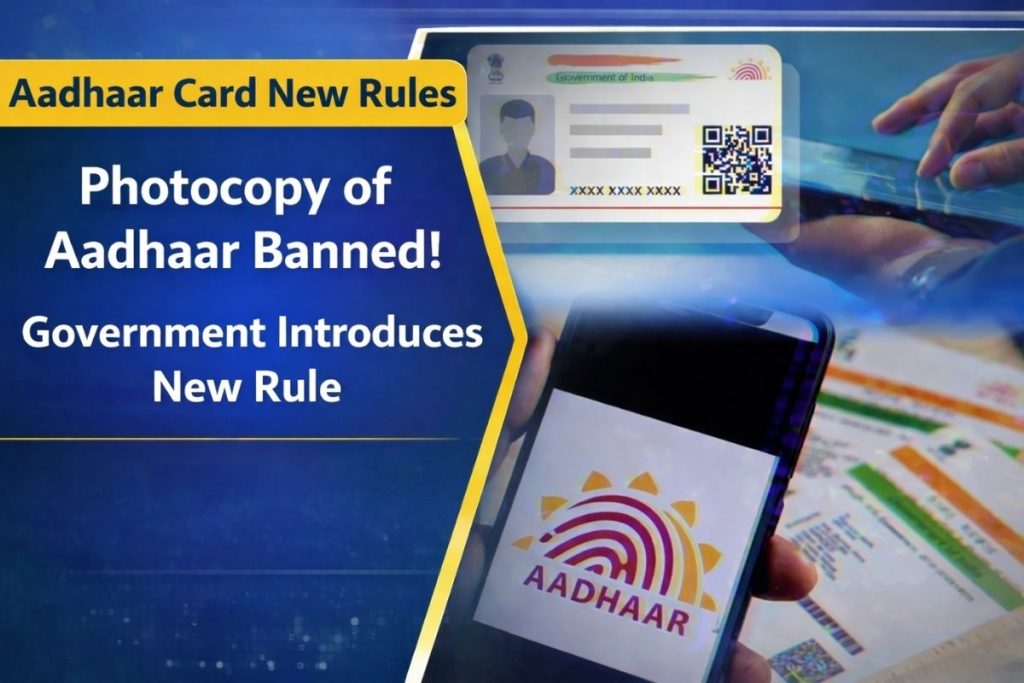
In 2026, the Government of India is rolling out a major change to Aadhaar verification rules that will transform how identity checks are done across the country. Under the new regulations approved by the Unique Identification Authority of India (UIDAI), physical photocopies of Aadhaar cards will no longer be accepted by hotels, event organisers, and other private entities for offline verification — a practice that has been common for decades.
Instead, identity verification will be done through digital methods such as QR code scanning and app-based authentication, ensuring stronger data privacy, reduced misuse of personal information and compliance with modern digital and data protection standards. This rule marks a major step toward secure, paperless Aadhaar verification in India in 2026, significantly enhancing privacy and reducing the risk of sensitive data leakage.
Aadhaar Verification New Rules 2026
For many years, Aadhaar photocopies have been widely collected for identity verification in multiple situations — such as hotel check-ins, event registrations, and business services — but this practice carries significant privacy and security risks because copies of Aadhaar contain sensitive personal information. Collecting and storing physical photocopies exposes individuals to:
- Data theft and leakage
- Identity misuse
- Unauthorized storage of sensitive details
To address these issues and align Aadhaar verification with the Digital Personal Data Protection law, UIDAI has approved a new rule that effectively prohibits physical Aadhaar photocopying for verification by private entities.
Aadhaar Verification Rules 2026 Key Details
| Aspect | New Rule in 2026 |
| Rule Title | Aadhaar Verification New Rules 2026 |
| Authority | Unique Identification Authority of India (UIDAI) |
| Key Change | Aadhaar photocopies no longer accepted for offline verification |
| Who It Affects | Hotels, event organisers, retailers, private verifiers |
| New Method | QR code scan / app-based verification |
| Registration Requirement | Entities must register with UIDAI for Aadhaar verification |
| Technology | New Aadhaar app / API-based offline verification |
| Primary Goal | Enhance data privacy, stop Aadhaar misuse |
| Timeline | Rules approved and to be notified soon |
| Legal Basis | Aadhaar Act compliance |
| Official Website | https://uidai.gov.in/ |
What the New Aadhaar Rule 2026
Under the 2026 rule:
Physical Photocopies Will Not Be Accepted
Hotels, event organisers, private businesses, and other offline verifiers will no longer be allowed to take, store, or use Aadhaar photocopies as identity proof. This reduces the risk of personal data being mishandled or leaked.
QR Code & App-Based Verification Will Replace Copies
Verification will be done by scanning the QR code on the Aadhaar card or by using a new Aadhaar mobile app / API that securely authenticates identity electronically — without exposing sensitive data.
Entities Must Register with UIDAI
Private entities that want to perform Aadhaar-based verification must now register with the UIDAI and use the authorised digital verification methods. Manual photocopy checks will be considered out of use and against rules.
How Aadhaar Verification Worked Before vs. After 2026
Before 2026
• Aadhaar photocopies were widely accepted for identity checks.
• Entities stored copies on file for future reference.
• Privacy risks were high.
After 2026
• Paperless verification becomes standard.
• Only QR code scans or app-based digital checks are allowed.
• Private verifiers must register and integrate digital APIs for Aadhaar authentication.
• Physical copies become obsolete and discouraged under law.
Who Must Follow the New Aadhaar Rule?
This rule primarily affects entities and organisations that engage in offline Aadhaar verification. These include:
- Hotels and guest houses during check-in
- Event organisers and exhibition managers
- Retailers and service providers requiring age or identity checks
- Airports and travel checkpoints (in coordination with UIDAI systems)
- Any business or private verifier collecting Aadhaar photocopies
In short, any organisation that previously asked for copies of Aadhaar for verification must now adapt to digital verification methods.
How the New Digital Aadhaar Verification Works
Scan the QR Code
The Aadhaar card has a QR code that contains encrypted identity data (name, masked details). Verifiers can scan this to confirm identity instantly without needing a photocopy.
Aadhaar App / API Verification
Entities that register with UIDAI will get access to secure API endpoints or an official Aadhaar app that enables them to authenticate identity digitally.
These methods:
- Work offline (no central server requirement every time)
- Reduce downtime errors
- Boost privacy compliance
This shift not only improves security but also aligns Aadhaar authentication with digital governance and privacy standards.
Benefits of the New Aadhaar Rule
Stronger Data Privacy
Physical photocopies are a major source of personal data exposure. The new rule drastically reduces this risk by moving toward digital authentication.
Reduced Identity Misuse
Without paper copies floating around, there is less chance of your Aadhaar information being misused or duplicated.
Convenient Digital Checks
With QR scanning or app verification, identity checks become faster and more secure.
Better Compliance with Privacy Laws
The rule prepares Aadhaar authentication to comply with India’s Digital Personal Data Protection Act and modern privacy expectations.
Challenges and How They’ll Be Addressed
Transitioning away from paper to digital verification may present short-term challenges:
Technical Integration for Small Businesses
Small entities may need help integrating APIs — UIDAI and partners are expected to provide support materials and registration guidance.
Training on New Systems
Verifiers will need training to use QR scanners and app verification correctly.
Public Awareness
Citizens will need to know that photocopies are no longer required — promoting digital literacy will help.
Despite initial hurdles, the benefits outweigh the transitional challenges by significantly improving identity security.
How This Affects Citizens in Everyday Life
At Hotels and Events
You will no longer hand over your Aadhaar photocopy at check-in counters or event entry points — instead, your identity will be verified electronically.
At Shops or Services Requiring Age Proof
Rather than providing a copy of Aadhaar, you’ll show the card’s QR code (or digital version) for instant scanning, protecting personal details.
During KYC Processes
Government services may still require Aadhaar info — but photocopies won’t be the standard route anymore; digital verification replaces it.
What You Should Know as an Aadhaar Holder
- Don’t provide physical photocopies of Aadhaar to businesses and hotel staff.
- Carry your original Aadhaar card or Digital Aadhaar e-version.
- Allow QR code or app-based scanning for verification.
- Be aware that QR scanning discloses only essential data, not full sensitive details.
Timeline for the New Aadhaar Rule
The rule has been approved by UIDAI and is expected to be notified and rolled out in 2026. Entities engaged in Aadhaar verification will need to comply soon after official notification.
The 2026 Aadhaar verification rule is a big leap toward a secure, privacy-centric future for digital identity in India. By phasing out paper photocopies and encouraging digital verification methods like QR scanning and app-based authentication, the government is protecting citizens’ sensitive information and aligning Aadhaar with modern data protection standards. Though it may take some time for businesses and verifying entities to adapt, this rule reinforces India’s commitment to a secure, paperless, and privacy-preserving identity ecosystem — a key milestone in the country’s digital transformation journey.
FAQ’s
1. Will Aadhaar photocopies be illegal everywhere?
The new rule specifically targets offline Aadhaar card photocopies collected by hotels, events and private verifiers. Government departments and official KYC processes may still accept Aadhaar digitally via QR or secure online authentication, but paper copies will no longer be the standard.
2. How will identity verification be done without Aadhaar photocopies?
Verification will use QR code scanning on the card or a new Aadhaar app/API-based digital authentication system that securely verifies identity without storing physical copies.
3. Do individuals need to do anything to prepare?
Aadhaar holders should ensure they have access to their physical Aadhaar card or digital version (mAadhaar) and be ready to support QR or app-based verification instead of providing photocopies.