India’s welfare landscape is entering a decisive new phase in 2026, with governments placing basic household relief at the centre of policy. One of the most talked-about initiatives right now is the announcement of up to 500 free electricity units for eligible ration card holders—being projected as the first major benefit under a new welfare framework focused on cost-of-living relief.
For millions of low- and middle-income families, electricity bills have become a monthly pressure point. Rising appliance usage, hotter summers, and higher tariffs have made power costs unavoidable. Against this backdrop, the free electricity scheme is being positioned not as a subsidy handout, but as essential support, similar to free ration or health insurance.
500 Free Electricity Units for Ration Card Holders
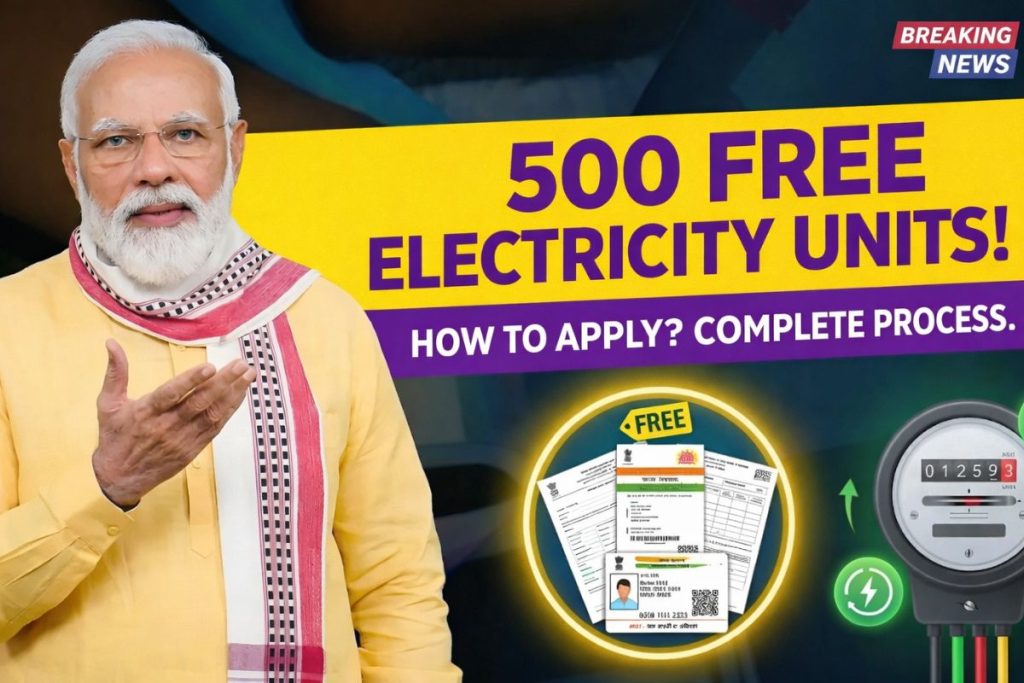
The 500 Free Electricity Units scheme is a government-backed welfare initiative under which eligible ration card holders may receive electricity at zero cost up to a fixed monthly or billing-cycle limit.
Under this proposal:
- Households consuming electricity within the defined free-unit cap will pay ₹0 electricity charges
- Consumption beyond the free limit will be billed at normal rates
- The benefit is expected to be linked directly to ration cards and domestic electricity connections
500 Free Electricity Units Key Highlights
| Topic | Details |
| Scheme Benefit | Up to 500 units of free electricity for eligible ration card holders |
| Status (2026) | Announced / under phased rollout; final eligibility depends on state government notification |
| Official Website | https://epds.nic.in/ |
Why Electricity Relief Became a Priority in 2026
Electricity has quietly become one of the highest unavoidable household expenses. Even families that carefully control spending cannot avoid lighting, fans, phone charging, refrigerators, or water pumps.
Key reasons behind the new scheme:
- Rising cost of living: Inflation has pushed up food, healthcare, rent—and power tariffs in many regions.
- Extreme weather conditions: Longer summers and heatwaves have increased electricity usage, especially among poor households.
- Digital dependence: Online education, digital payments, and work-from-home options require reliable electricity access.
- Welfare expansion approach: Governments are increasingly shifting from cash transfers to service-based benefits (food, power, healthcare).
By introducing free electricity as a first benefit, the government signals a basic-needs-first policy approach.
Who Is Expected to Benefit from the Scheme?
The scheme is primarily designed for ration card holders, but eligibility may depend on ration card type, income level, and electricity usage pattern.
Likely beneficiary groups include:
- BPL (Below Poverty Line) ration card holders
- Antyodaya Anna Yojana (AAY) families
- Priority Household (PHH) ration card holders
- Low-income families registered under state welfare databases
- Households with domestic electricity connections only
Commercial connections, industrial users, and high-consumption households are not expected to be eligible.
Is This a Central or State Government Scheme?
This is one of the most important questions—and also the most misunderstood.
At present, electricity subsidies are implemented by state governments, even when policy direction or funding support comes from the Centre. That means:
- The central government provides policy backing or financial support
- States decide eligibility, unit limits, and billing rules
- Implementation timelines vary state by state
Several states already run free or subsidised electricity schemes. The 500-unit announcement is being seen as a new unified or expanded welfare model, possibly inspired by existing state programs but framed as a first benefit under a new governance approach supported by the Government of India.
How the 500 Free Units Benefit Is Likely to Work
While final operational guidelines are awaited, most experts expect the scheme to follow a direct billing adjustment model.
Step-by-step expected process:
- Ration card verification
- Ration card details linked with electricity consumer number
- Eligibility check
- Based on ration card type and household category
- Monthly or billing-cycle unit calculation
- Free units adjusted automatically in the bill
- Zero bill or reduced bill issued
- If usage is within the free limit
- Normal charges only on excess units
- Consumption beyond 500 units billed normally
No cash transfer is expected. The relief comes directly through lower or zero electricity bills.
Monthly or Annual Limit – What Is More Likely?
One major point of confusion is whether the 500 free units apply:
- Per month
- Per billing cycle
- Per year
Based on existing state models and early indications:
- The benefit is most likely monthly or per billing cycle
- Annual lump-sum units are unlikely, as they reduce consumption control
- Monthly limits encourage energy efficiency
Final clarification will come only through state notifications.
Will All Ration Card Holders Get 500 Free Units?
No. This is a targeted welfare scheme, not a universal subsidy.
You may not qualify if:
- You hold a non-priority or high-income ration card
- Your household electricity consumption is consistently high
- Your electricity connection is commercial or mixed-use
- Your ration card or Aadhaar details are not updated
Governments aim to protect public finances while still delivering meaningful relief to those who truly need it.
Documents Likely Required
In many states, the benefit may be auto-applied, but some regions could require verification.
Commonly expected documents:
- Ration card
- Aadhaar card
- Electricity bill / consumer number
- Mobile number linked to ration card
- Bank account (for verification, not payment)
Always rely on official state portals or electricity department notices.
How This Scheme Helps Senior Citizens, Women & Rural Families
Senior Citizens
- Reduces monthly fixed expenses
- Especially helpful for pension-dependent households
Women-Led Households
- Lower electricity cost improves household budgeting
- Supports cooking, water supply, and safety lighting
Rural & Semi-Urban Families
- Electricity bills often spike due to pumps and seasonal usage
- Free units bring stability during peak months
This is why the scheme is being described as social infrastructure support, not just a subsidy.
Economic Impact: Who Pays for Free Electricity?
A common concern is: “If electricity is free, who pays the cost?”
The funding model usually involves:
- State government budget allocations
- Cross-subsidy from higher-consumption slabs
- Central assistance or reform-linked grants
- Efficiency improvements in power distribution companies (DISCOMs)
Governments increasingly argue that preventing energy poverty costs less than managing its consequences.
What Happens If You Use More Than 500 Units?
If your household crosses the free limit:
- You will not lose the benefit entirely
- Charges apply only on excess units
- Example:
- Usage: 620 units
- Free: 500 units
- Billable: 120 units only
This structure encourages responsible consumption rather than misuse.
Is This Scheme Linked with Other Welfare Benefits?
Yes, indirectly.
Governments are increasingly integrating:
- Ration card databases
- Electricity consumer records
- Social welfare beneficiary lists
This helps ensure:
- No duplication
- Better targeting
- Faster benefit delivery
In the future, electricity relief may be bundled with:
- Free ration
- Pension schemes
- Housing or health benefits
What Ration Card Holders Should Do Right Now
Even before full rollout, you should prepare.
Update Your Ration Card
Ensure:
- Aadhaar is linked
- Family members are correctly listed
Check Electricity Connection Details
- Domestic connection only
- Correct name and address
Watch State Announcements
- Follow state electricity department websites
- Avoid rumours on social media or WhatsApp
Control Consumption
- Staying within limits ensures full benefit
Why This Is Being Called the “First Benefit” Under a New Scheme
Governments are increasingly framing welfare in layers:
- Food security
- Energy security
- Health security
- Income security
By starting with free electricity, the government is signaling a basic-needs-first welfare philosophy—where essential services are prioritized before financial transfers.
FAQ’s
1. Is the 500 free electricity units scheme confirmed nationwide?
No. The scheme is being announced and implemented state-wise. Final eligibility and unit limits depend on state government notifications.
2. Do I need to apply separately for free electricity?
In many cases, no. If your ration card and electricity connection are properly linked, the benefit may be applied automatically. Some states may require verification.
3. Will this benefit continue every year?
Continuation depends on government policy, budget allocation, and compliance. Most welfare electricity schemes are reviewed annually.